 how-to
What Documents Are Needed for Auto Financing?
Table of Contents
- What Documents Are Needed for Auto Financing? Start Here
- Your Car Loan Documents Checklist: The Core Requirements
- Proof of Income for a Car Loan: What Lenders Want to See
- Documents for a Self-Employed Car Loan: Alternatives to Pay Stubs
- Documents Needed to Buy a Car: Vehicle, Insurance, and Down Payment
- The Documents Most Applicants Forget (and How to Avoid Delays)
- Conclusion: Getting Your Auto Financing Approved
- Frequently Asked Questions
Last Updated: October 7, 2026
What Documents Are Needed for Auto Financing? Start Here
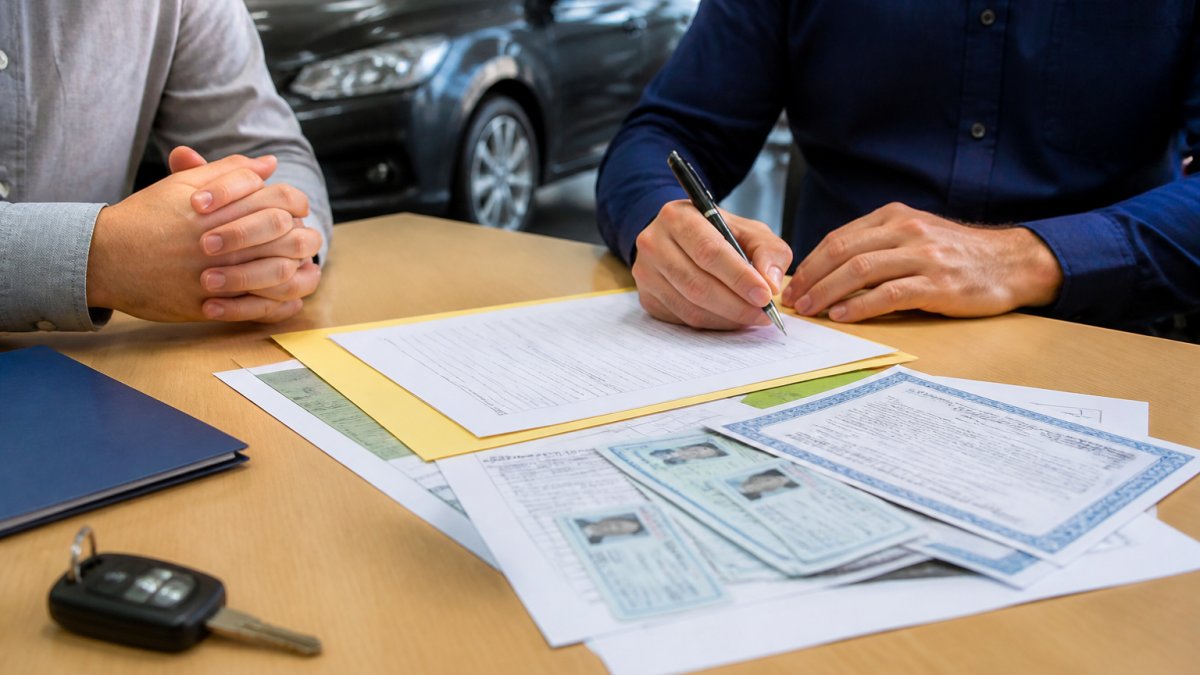
Getting approved for auto financing comes down to one thing: proving you are who you say you are, that you live where you say you live, and that you can handle the payments.
Most applications stall for one boring reason: a missing document. Not bad credit. Not a low income. A piece of paper nobody told the applicant to bring.
Financial Consumer Agency of Canada guidance on vehicle financing
This guide covers the full car loan documents checklist, what lenders actually verify, and the paperwork most applicants forget. We will also show you what changes if you are self-employed, new to the country, or applying entirely online.
Your Car Loan Documents Checklist: The Core Requirements
Every lender starts with the same foundation: identification, residency, and banking details. Get these three right and the rest of the process moves quickly.
Identification and Legal Status
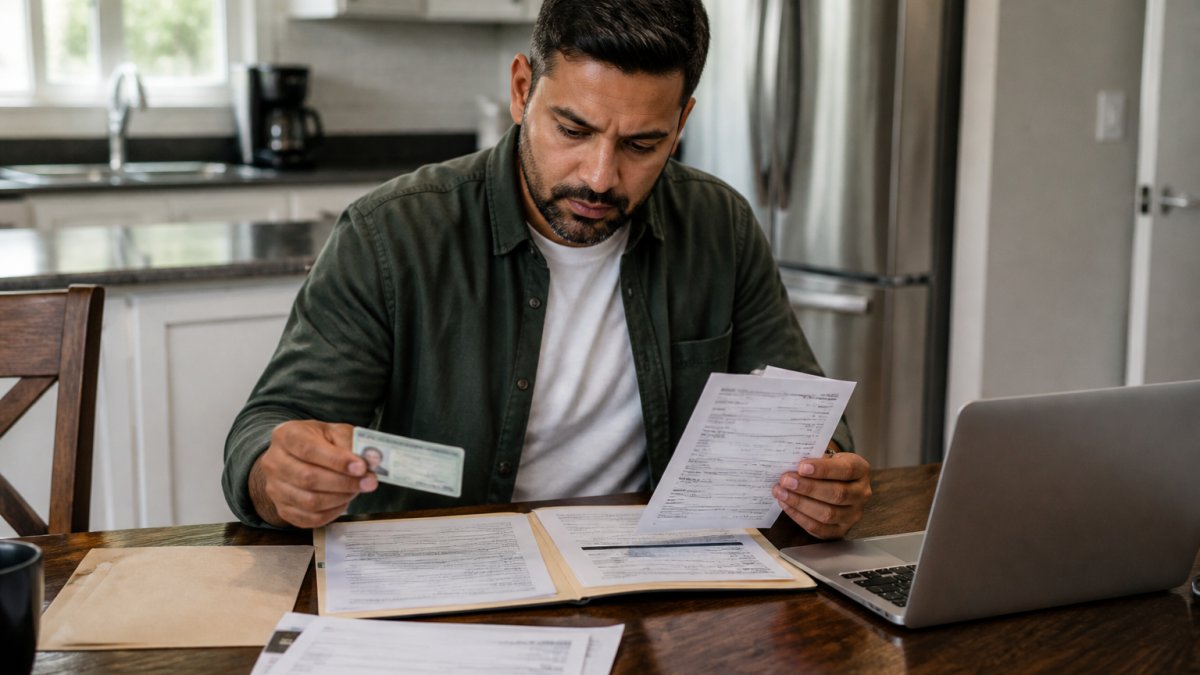
You need government-issued identification that proves your name, date of birth, and legal right to be in the country. A valid driver's licence is the most common choice, but a passport works too.
If you are not a citizen, lenders will ask for one of the following:
- A work permit
- A permanent resident card
- A study permit with a valid visa
The document must be current. An expired licence or permit slows down credit approval, even when everything else is in order.
Proof of Residency and Banking Information
Lenders want to confirm you live at the address on your application. A recent utility bill, lease agreement, or bank statement usually does the job. The document should be dated within the last 60 to 90 days.
You will also need your banking details, typically a void cheque or a direct deposit form. This is how your monthly payments get set up. A bank statement covering the last few months helps lenders see how money moves through your account.
Proof of Income for a Car Loan: What Lenders Want to See
Proof of income for a car loan is the section that worries applicants most, but the requirement is simpler than it looks: show that money comes in regularly. Most lenders ask for recent pay stubs, often covering the last two to three pay periods.
An employment letter adds weight. It confirms your job title, how long you have worked there, and your rate of pay. Some lenders also request tax documents, such as a recent notice of assessment.
Here is what the core documents cover:
| Document | What It Proves | Typical Timeframe |
|---|---|---|
| Pay stubs | Regular employment income | Last 2-3 pay periods |
| Employment letter | Job stability and pay rate | Current |
| Bank statements | Cash flow and deposits | Last 3 months |
| Notice of assessment | Annual income history | Most recent tax year |
Lenders look at your debt-to-income ratio, which compares your monthly debts to your monthly income. A steady deposit history matters more than a perfect credit score for many approvals.
Documents for a Self-Employed Car Loan: Alternatives to Pay Stubs
A self-employed car loan does not require pay stubs, because there are none. Instead, lenders accept other proof that your business earns money.
Common alternatives include:
- Business or personal bank statements showing regular deposits
- Recent tax returns and notices of assessment
- Invoices or contracts from ongoing clients
- A letter from your accountant confirming income
What most guides miss is that consistency beats size. A freelancer with steady monthly deposits often gets approved faster than someone with one large, irregular payment. If your income varies, gather six to twelve months of statements rather than three.
Gig Workers and Commission-Based Income
If you drive for a rideshare or delivery platform, or earn commission, your income is real but it does not look like a traditional pay stub. Lenders know this, and most have adapted their document requirements.
For gig workers, expect to provide:
- Platform earnings summaries, often available as monthly or annual statements
- Bank statements showing deposits from the platform
- A notice of assessment from your most recent tax return
- Your driver's licence and vehicle registration if you use the car for work
For commission-based employees, the list is slightly different:
- Recent pay stubs showing base plus commission
- An employment letter confirming your commission structure
- Year-to-date earnings summary from your employer
- Previous year's notice of assessment
The key is to show a pattern. A single strong month does not carry as much weight as six months of steady deposits. If your income fluctuates, lenders may average your earnings over the last year rather than looking at your best month.
What Lenders Actually Verify
Lenders are not just checking that money exists. They are checking that it is likely to keep coming. For self-employed applicants, that means looking at:
- Deposit frequency: weekly, biweekly, or monthly is easier to assess than irregular
- Client concentration: if one client makes up most of your income, some lenders see risk
- Tax filing history: a notice of assessment confirms your declared income
- Business longevity: two years of self-employment is a common threshold for standard approval
If you are newly self-employed, some lenders will accept a combination of previous employment records and current contracts. Others may require a co-signer or a larger down payment. A lender network can match you with the ones most likely to approve your profile.
Documents Needed to Buy a Car: Vehicle, Insurance, and Down Payment
Once your personal paperwork clears, the focus shifts to the vehicle itself. The documents needed to buy a car include details about the specific vehicle, proof of insurance, and confirmation of any down payment or trade-in.
Insurance and Vehicle Documentation
You will need the vehicle identification number, often called the VIN. This number lets the lender confirm the car's history and value. If you are buying from a dealer, they supply this directly.
Proof of insurance is required before you drive off the lot. Lenders need to see that the vehicle is covered, and they are usually listed as a loss payee on the policy.
A down payment lowers your monthly payments and improves your financing terms. It does not have to be large, and zero-down options exist for qualified applicants.
The Documents Most Applicants Forget (and How to Avoid Delays)
The forgotten items are predictable, and they are almost never about credit. They are about paperwork nobody mentioned.
Here is the shortlist we see most often:
- A void cheque, when the applicant assumed a bank card would do
- A second piece of ID, when the first one expired last month
- Proof of address dated within 90 days, not from two years ago
- The full notice of assessment, not just a screenshot of a tax refund
- Trade-in lien details, when the old loan was never fully paid off
Newcomer and Immigrant Documentation
If you arrived recently, the standard checklist shifts. Instead of a birth certificate or a long-standing credit file, lenders want to see your legal status and your ability to pay.
Expect to provide:
- A valid work permit, study permit, or permanent resident card
- Your social insurance number (or confirmation of application)
- A passport or other government-issued photo ID from your home country
- Proof of address in Canada, such as a lease, utility bill, or bank statement dated within 90 days
- Employment letter or recent pay stubs from a Canadian employer
A credit history from another country usually does not transfer. Lenders instead look at your income documents and banking records to build a picture of your reliability. If you have been in the country for less than two years, some lenders may ask for a larger down payment or a co-signer. A common pattern is that newcomers who can show six months of steady Canadian income and a clean banking history get approved without a local credit score.
Digital vs. Physical Documents: What You Can Submit Online
Most lenders now accept digital copies for the initial application, but some documents still require in-person verification or a certified copy.
| Document | Digital Submission Accepted? | Notes |
|---|---|---|
| Driver's licence | Yes, for pre-approval | Physical inspection required at signing |
| Pay stubs | Yes | Must be clear, complete, and current |
| Bank statements | Yes | PDF from your bank app is preferred |
| Notice of assessment | Yes | Full document, not a screenshot |
| Void cheque | Yes | Direct deposit form also works |
| Insurance proof | Yes, for pre-approval | Final confirmation before delivery |
| Trade-in registration | Often yes | Lien search may require original |
A blurry photo of a pay stub gets rejected. A PDF downloaded straight from your bank app gets accepted. If you are applying entirely online, scan or photograph documents in good lighting, keep the full page in frame, and avoid cropping out account numbers or dates.
Conclusion: Getting Your Auto Financing Approved
The paperwork is the easy part once you know what to gather. The harder part is finding a lender willing to look past a thin credit file, a bankruptcy, or a gap in your work history. That is where a network of lenders beats a single bank application every time. Ontario Drivez works with more than 30 lenders and partners, offers flexible payment plans with zero-down options, and charges no hidden fees. We have helped drivers on ODSP, newcomers with no credit history, and families who need a van or truck without a perfect credit score.
Frequently Asked Questions
What proof of income do I need for auto financing?
Most lenders ask for recent pay stubs covering the last 30 to 90 days, plus an employment letter confirming your role and salary. If you receive disability support, child tax benefits, or other government income, bring your benefit statements. Self-employed applicants can use recent tax documents, bank statements, and invoices instead. Lenders use this proof of income for a car loan to calculate your debt-to-income ratio and set monthly payments you can manage.
Can I get auto financing if I am self-employed?
Yes. Self-employed applicants usually need to show more paperwork because there are no pay stubs to verify income. Gather your last two years of tax documents, recent bank statements, and invoices or contracts. A letter from your accountant can also help. Lenders review these documents for a self-employed car loan to confirm your income is steady enough to support monthly payments. Having a larger down payment can strengthen your application.
Do I need proof of residence to apply for a car loan?
Yes, most lenders require proof of residency. A recent utility bill, lease agreement, or bank statement with your name and current address usually works. If you recently moved, update your address with your bank and on your government-issued identification first. This step prevents delays during the loan application and helps the lender verify you meet their requirements.
What documents should I bring when buying a car?
Bring your driver's licence, proof of income, proof of residency, and banking information. For the vehicle itself, you will need proof of auto insurance, and if you are trading in a car, its registration and lien details. A complete car loan documents checklist saves time at the dealership. Having digital copies on your phone can also speed things up if you apply online.