 how-to
How to Improve Credit Score After Bankruptcy in 2026
Table of Contents
- How Long Bankruptcy Stays on Your Credit Report and When to Start Rebuilding
- Check Your Credit Report for Errors After Bankruptcy
- Use a Secured Credit Card After Bankruptcy to Rebuild Payment History
- Pay Bills on Time and Keep Credit Use Low
- Consider a Credit-Builder Loan or a Car Loan After Bankruptcy
- Limit New Credit Applications and Monitor Your Progress
- Conclusion: A Realistic Path to a Better Credit Score
- Frequently Asked Questions
Last Updated: October 13, 2026
How Long Bankruptcy Stays on Your Credit Report and When to Start Rebuilding
Bankruptcy does not erase your credit history forever, and knowing how to improve credit score after bankruptcy starts with understanding the clock.
That timeline sounds harsh. But here is what most guides miss: the clock starts at discharge, not at filing.
Our team has spent over 20 years helping clients get approved for car loans, vans, and trucks through our network of more than 30 lenders.
First and Second Bankruptcy: Different Timelines
A first bankruptcy is reported for six years from discharge by Equifax and seven years by TransUnion. A second bankruptcy stays on file for 14 years from the date of discharge.
Those extra years matter. Lenders look at how recently you filed, not just whether you filed.
The Best Time to Start Rebuilding Your Credit
Start the day you receive your discharge papers. Every month of clean payment history after discharge pushes the bankruptcy further into your past.
Waiting does nothing for you. Time alone does not rebuild credit. Only new, positive activity does.
Check Your Credit Report for Errors After Bankruptcy
Your first task after discharge is confirming that your credit report actually reflects your discharge. This is where a lot of people get stuck without realizing it.
Pull your report from both bureaus. Then check three things:
- Accounts included in the bankruptcy should show a zero balance
- The bankruptcy itself should show a discharge date
- No debts that were discharged should still show as owing
If something looks wrong, you have the right to dispute it.
Why Errors Happen and How to Dispute Them
Errors happen because creditors report to each bureau separately, and updates get missed. An account that should read "discharged" may still show an outstanding balance months later.
To dispute an error, contact the credit bureau in writing. You can find the process outlined by the Office of the Superintendent of Bankruptcy Canada and through each bureau's dispute portal.
Fixing errors is one of the fastest wins available. A single wrongly reported balance can drag your score down for no reason.
Use a Secured Credit Card After Bankruptcy to Rebuild Payment History
A secured credit card is the most reliable tool for rebuilding payment history after bankruptcy. You put down a deposit, the issuer gives you a credit limit, and you use the card like any other.
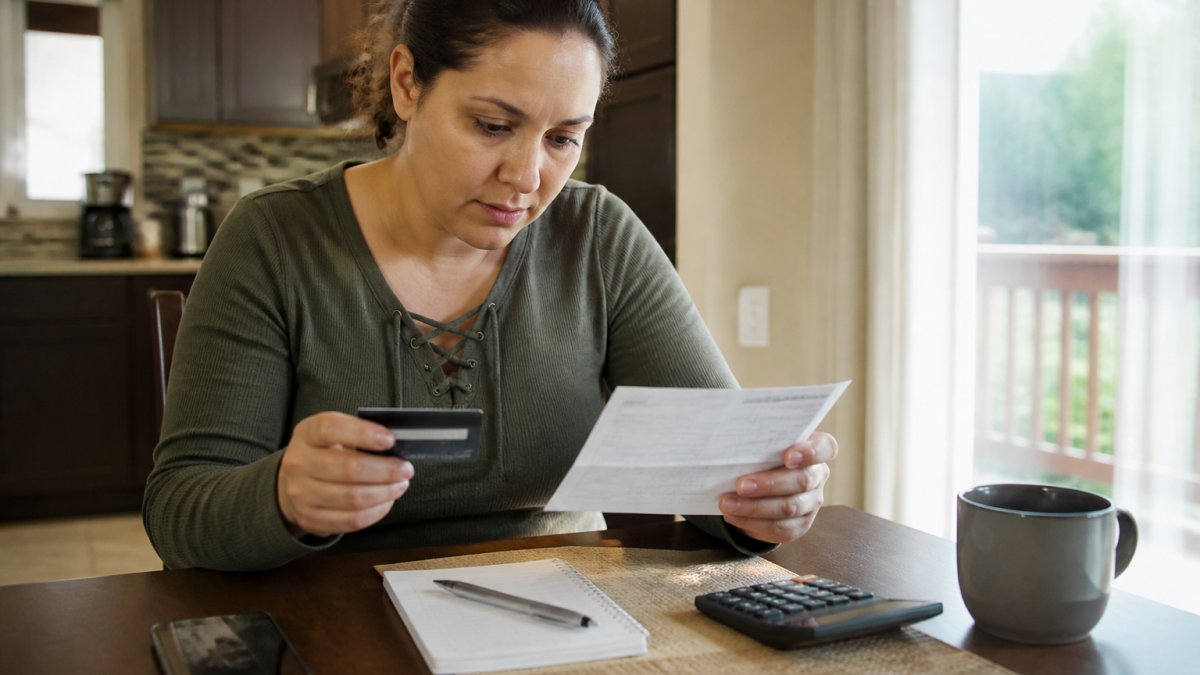
Payment history is the single biggest factor in your credit score. A secured card lets you build it without a lender taking a risk on you.
How to Choose a Secured Card and Avoid Common Mistakes
Look for a card that reports to both Equifax and TransUnion. Some issuers only report to one, which slows your progress.
Common mistakes we see:
- Missing even one payment because the deposit felt like "free money"
- Carrying a balance near the limit every month
- Applying for three cards at once and collecting hard inquiries
Use the card for one small recurring bill. Pay it off in full every month. That is it.
Pay Bills on Time and Keep Credit Use Low
On-time payments and low balances are the two habits that move your score most. Everything else is secondary.
Credit use is the share of your available credit you are using. If your limit is $1,000 and you owe $300, your use is 30%. Keeping it under 30% is a common target, and under 10% is better.
Set Up Automatic Payments and Monitor Your Balances
Automate everything you can. Set minimum payments to come out automatically so a busy week never turns into a missed payment.
Then check your balances weekly. If you are close to your limit, pay down before the statement date, not after.
| Habit | Why It Helps | How Often |
|---|---|---|
| Pay every bill on time | Builds payment history, the top score factor | Monthly |
| Keep use under 30% | Shows you are not overextended | Check weekly |
| Review both credit reports | Catches errors early | Every 3-4 months |
| Avoid new applications | Limits hard inquiries | Only when needed |
Consider a Credit-Builder Loan or a Car Loan After Bankruptcy
A credit-builder loan and a car loan both add installment credit to your report, which diversifies your file. Lenders like seeing that you can handle different types of debt, not just revolving credit.
How a Credit-Builder Loan Actually Works
A credit-builder loan flips the usual structure. Instead of handing you cash up front, the lender places the amount you borrow into a locked savings account or GIC.
The appeal is twofold: you build payment history and you end up with savings.
Before signing, ask three questions:
- Does the lender report to both bureaus, or only one?
- What is the total cost of borrowing over the full term?
- Is there a penalty for paying the loan off early?
A credit union or a smaller lender is often more willing to approve a credit-builder loan after bankruptcy than a major bank.
How a Car Loan Can Help Rebuild Credit
A car loan does double duty. It gets you to work, and it adds a major installment account to your credit file.
A car loan also tends to carry more weight than a credit-builder loan because the balance is larger and the payment history is longer.
Ontario Drivez works with lenders who approve car loans after bankruptcy, including zero-down options and flexible payment plans.
The Risks You Need to Weigh
Both products carry the same core risk: a missed payment hurts more than the loan helps. After a bankruptcy, a fresh delinquency on an installment account is a serious negative that can set your recovery back by months.
Other pitfalls to watch:
- High interest rates. Lenders who approve borrowers post-bankruptcy often price for the risk. Compare the annual percentage rate across at least two offers before committing.
- Add-on products. Extended warranties, rust protection, and payment insurance are frequently bundled into auto financing. They are optional, ask for them to be itemized separately.
- Loan term stretching. A longer term lowers the monthly payment but increases total interest and keeps you in the loan longer. A shorter term you can comfortably afford is usually the better credit-building move.
Do not take on a car loan or credit-builder loan payment you cannot cover in a month with reduced income. A missed payment on a fresh installment account after bankruptcy is one of the most damaging entries you can add to your file.
One rule: make every payment. A car loan is a big positive on your file, but a missed payment is a big negative.
Limit New Credit Applications and Monitor Your Progress
Every application creates a hard inquiry, and a cluster of them signals risk to lenders. After bankruptcy, that signal hurts more than usual. But 'apply less' is only half the advice. The other half is knowing when to apply, how to track progress without triggering inquiries, and what realistic movement looks like.
A Staged Recovery Timeline
Most people recover faster when they sequence their actions instead of doing everything at once. Here is a practical framework:
First 30 days after discharge
- Order your free credit reports from Equifax Canada and TransUnion Canada.
- Confirm the discharge is recorded and that included accounts show a zero balance.
- File a written dispute for any account still showing a balance that was discharged.
Months 2 through 6
- Use the secured card for one small recurring bill and pay it in full each month.
- Keep your credit use under 30% of your limit, under 10% is better.
- Do not apply for anything new. Let the payment history accumulate.
Months 6 through 12
- If your payment streak is clean, consider adding one installment product, a credit-builder loan or a car loan.
- Space any new application at least six months from the last one.
- Review both reports again and dispute anything inaccurate.
Beyond 12 months
- Continue the same habits. The bankruptcy notation ages, and your positive history lengthens.
- Revisit your report every three to four months.
How to Dispute Inaccurate Bankruptcy Reporting
Checking your reports is step one. Correcting them is where the real gains hide. Here is the process:
- Get both reports. Equifax Canada and TransUnion Canada maintain separate files and often disagree.
- Identify the error. Common ones include a discharged account still showing a balance, a missing discharge date, or a debt that was included in the bankruptcy still listed as owing.
- Gather your documents. Your discharge order from the Office of the Superintendent of Bankruptcy is your proof.
- File a written dispute with the bureau. Include your full name, the account in question, the specific error, and a copy of your discharge documents. Each bureau has its own online dispute portal and mailing address.
- Keep a record. Note the date you filed, what you sent, and any reference number. Under Canadian credit reporting rules, the bureau must investigate and correct inaccurate information.
- Follow up. If the error is not corrected within a reasonable window, escalate in writing and keep copies of everything.
A single wrongly reported balance can drag your score down for no reason. Disputing it is free and one of the fastest wins available.
Monitor Progress Without Unnecessary Applications
You can track your file without generating hard inquiries:
- Pull your free credit reports from both bureaus on a regular schedule.
- Use a credit monitoring service to watch for changes and possible fraud.
- Track your own credit use and payment streak in a spreadsheet or budgeting app.
What you should not do is apply for a new product just to see your score. Soft inquiries, like checking your own report, do not affect your score. Hard inquiries from applications do.
Realistic Score Expectations
Scoring models differ, and no one can promise a specific point increase or a recovery date.
The Financial Consumer Agency of Canada offers free tools and guidance on understanding your credit report and your rights.
You do not need a perfect score to get approved for a car loan after bankruptcy. You need a discharge, steady income, and a lender who looks at the full picture. That is exactly what we do.
Conclusion: A Realistic Path to a Better Credit Score
Rebuilding after bankruptcy is not fast, and anyone who promises otherwise is selling something. What works is boring and consistent: check your reports, dispute errors, use a secured card, pay on time, keep balances low, and add an installment loan when you are ready.
Give the Ontario Drivez team a call to help you achieve your goals.
Give us a call at 647-467-3822 or visit us online at ontariodrivez.com.
Frequently Asked Questions
How long does it take to rebuild a credit score after bankruptcy?
There is no fixed timeline, but most people see gradual improvement over 12 to 24 months of consistent on-time payments and low credit utilization. Bankruptcy stays on your credit report for six years after discharge for a first bankruptcy, and during that time you can still build positive history. Focus on paying every bill on time, keeping balances low, and checking your report regularly. Small, steady habits matter more than quick fixes.
Can a secured credit card help rebuild credit after bankruptcy?
Yes, a secured credit card is one of the most accessible tools after bankruptcy because it requires a cash deposit that becomes your credit limit. Use it for small recurring purchases, pay the balance in full each month, and keep your utilization below 30 percent. Over time, the issuer may upgrade you to an unsecured card. Always confirm the card reports to both major credit bureaus so your on-time payments count.
How can I check my credit report for errors after bankruptcy?
Request your free credit reports from Equifax and TransUnion, the two main bureaus in Canada. Look for accounts that should show as discharged but still appear with a balance, or debts that were included in the bankruptcy but are listed as active. If you find an error, file a dispute online or by mail with the bureau and provide supporting documents. The bureau must investigate and correct inaccurate information.
Should I apply for a car loan after bankruptcy?
A car loan can be a practical way to rebuild credit if you need a vehicle and can manage the payments. After discharge, many lenders specialize in working with people who have a bankruptcy history. Before applying, check your credit report for accuracy, save for a down payment if possible, and get pre-approved to understand your rate. On-time car payments add positive history, but missing one can hurt. Only borrow what you can comfortably repay.