 how-to
How to Improve Credit Score for Auto Loan: Step-by-Step
Table of Contents
- Why Your Credit Score Decides Your Auto Loan Terms
- Step 1: Check Your Credit Report from Equifax and TransUnion
- Step 2: Tackle Past-Due Accounts and Collections First
- Step 3: Lower Your Credit use Ratio
- Step 4: Understand Your Debt-to-Income Ratio for Car Financing
- Step 5: Time Your Application to Minimize Hard Inquiries
- How Car Loans Build Credit After You Drive Off
- Know the Difference Between Pre-Qualification and Pre-Approval
- Frequently Asked Questions
Last Updated: September 7, 2026
Your credit score is the single biggest factor in what you pay for a car loan, and improving it step by step before you apply can save you thousands. In Canada, both Equifax and TransUnion calculate these scores based on your credit history. At Ontario Drivez, we have spent over 20 years helping residents secure auto financing regardless of their credit history. Below, we show you how to improve your credit score for an auto loan step by step.
Why Your Credit Score Decides Your Auto Loan Terms
Your credit score directly influences whether you get approved and the interest rate you are offered. A higher score signals lower risk, meaning a lower Annual Percentage Rate (APR) and a shorter, more manageable loan term. A lower score translates into higher rates and stricter lender requirements.
Two buyers financing the same vehicle can end up with dramatically different monthly payments simply because of their credit scores. Your creditworthiness also affects your required down payment, since some lenders ask for more money upfront to offset risk.
A few months of focused effort can move you into a better interest rate bracket, changing your principal balance and total cost of borrowing.
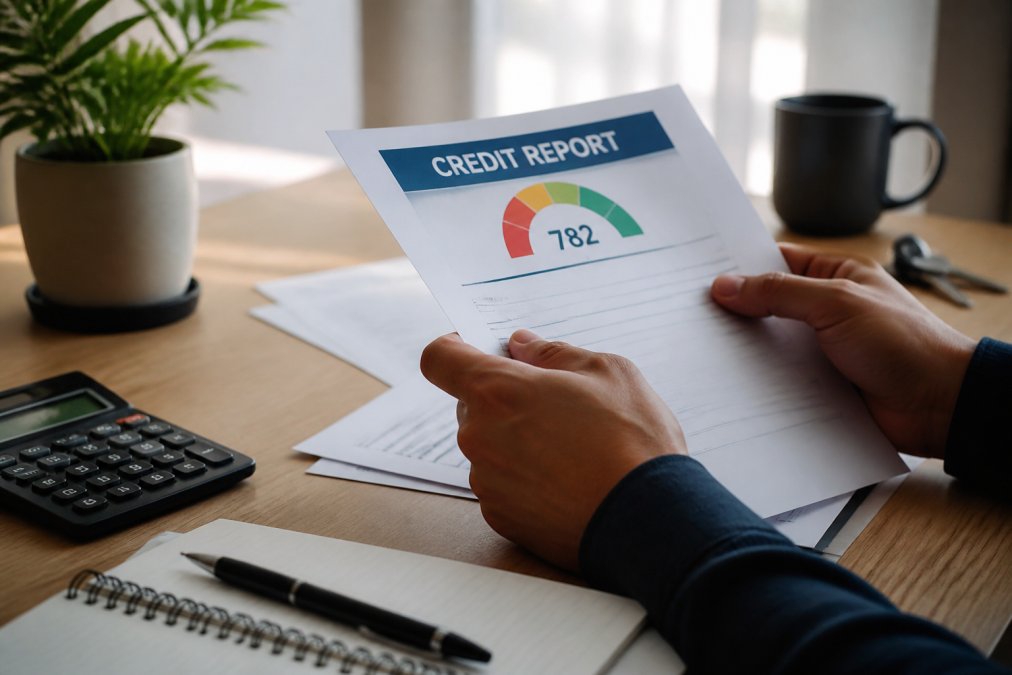
Step 1: Check Your Credit Report from Equifax and TransUnion
The first step is to pull your credit reports from both major Canadian credit bureaus, Equifax and TransUnion. Errors are more common than you might expect, and they can drag your score down unfairly.
You are entitled to request your credit report from both Equifax Canada and TransUnion Canada for free. Review every line carefully, including your payment history on revolving credit and installment loans, your credit limits, and any accounts you do not recognize. Look specifically for late payments you never made, accounts that are not yours, and balances that do not match your records.
How to Dispute Credit Report Errors
If you find an error, dispute it directly with the credit bureau that issued the report. Submit your dispute in writing, include any supporting documents, and explain exactly what is wrong. The bureaus are required to investigate, and you should follow up to confirm the correction has been applied.

Your Equifax and TransUnion reports can differ, which is why checking both matters. A clean report from one bureau does not guarantee the other is error-free.
Step 2: Tackle Past-Due Accounts and Collections First
Your payment history is the heaviest weighted factor in most credit scoring models, so past-due accounts and collections hurt you more than almost anything else. The fastest way to improve your credit score for an auto loan step by step is to bring overdue accounts current and address outstanding collections.
Start by calling your creditors to arrange payment on any accounts that are behind. If you cannot pay the full amount, ask about a payment arrangement. For accounts in collections, you may negotiate a pay-for-delete agreement, where the agency removes the account from your report in exchange for payment. Not all agencies will agree, but it is worth asking.
Step 3: Lower Your Credit use Ratio
Your credit use ratio measures how much of your available revolving credit you are using, and it is the second most important factor in your score. Divide your total credit card balances by your total credit limits. A ratio below 30 percent is generally considered good, and lower is better. Consumer Information on Credit Scores
The fastest way to lower your ratio is to pay down existing credit card balances. If you cannot pay them off entirely, focus on bringing each card below 30 percent use. You can also request a credit limit increase, which lowers your ratio without requiring you to pay anything down.
Step 4: Understand Your Debt-to-Income Ratio for Car Financing
While your credit score tells lenders how you have handled debt in the past, your debt-to-income ratio (DTI) tells them whether you can afford a new car payment now. This ratio compares your total monthly debt payments to your gross monthly income, and lenders use it to decide how much they will finance.
A lower DTI makes you more attractive to lenders because it shows you have room in your budget for a new payment. To improve it, pay down existing debts or increase your income. Extending your loan term can also lower your monthly payment, though this means paying more interest over the life of the loan.
The Down Payment Trade-Off: When Cash Can Offset a Lower Score
Most credit advice focuses exclusively on raising your score, but there is a second lever many buyers overlook: your down payment. A larger down payment does not just reduce the amount you finance; it can actively offset a lower credit score in the lender's risk assessment.
When a lender evaluates your application, they assess the risk that you will default. A larger down payment reduces that risk in two ways. First, it lowers the loan-to-value ratio, meaning the loan amount is smaller relative to the vehicle's worth. Second, a substantial down payment signals financial stability and commitment, which can reassure a lender even if your credit score is not where you want it to be.
In practice, a buyer with a credit score of 620 who puts down 20 percent may be approved where a buyer with the same score and zero down payment is declined. Some subprime lenders look for a minimum down payment, often 10 to 20 percent, as a condition of approval. This is not a substitute for a good credit score, but it is a strategic tool if you are shopping before your score has fully recovered.
How to Calculate What You Can Afford
Before you negotiate, know your numbers. Your gross monthly income is your income before taxes and deductions. Your total monthly debt payments include rent or mortgage, minimum credit card payments, student loans, personal loans, and other recurring obligations. Divide total debt by gross income to get your DTI ratio.
Most lenders prefer a DTI ratio at or below 40 to 45 percent for auto financing, though some subprime lenders will go higher if other factors are strong. If your DTI is above that threshold, you have three options: pay down existing debt, increase your income, or bring a larger down payment to reduce the monthly payment you need.
The Timing Strategy: When to Buy vs. When to Wait
If your score is borderline, waiting three to six months to improve it can save you significantly on interest. The trade-off is between buying now with a higher rate and a larger down payment, versus waiting to qualify for a better rate with less money down.
There is no single right answer; it depends on your urgency, your budget, and how quickly your score is improving. Understanding the interplay between your down payment, your DTI, and your credit score gives you the full picture before you commit.
| Factor | What It Measures | How to Improve It | Typical Timeline |
|---|---|---|---|
| Payment History | On-time payments | Bring accounts current, set up autopay | 1-3 months |
| Credit Use | Revolving credit used | Pay down balances below 30% | 1-2 billing cycles |
| Debt-to-Income Ratio | Monthly debt vs. income | Pay down debts or increase income | 3-6 months |
| Hard Inquiries | Recent credit applications | Limit new applications | 6-12 months |
| Down Payment | Cash paid upfront | Save for a larger down payment | Varies |
Step 5: Time Your Application to Minimize Hard Inquiries
Every time you apply for credit, a hard inquiry is recorded on your credit report, and multiple inquiries in a short period can lower your score. This is especially relevant when shopping for an auto loan, because you might be tempted to apply at several dealerships to compare offers.
Credit scoring models typically treat multiple auto loan inquiries within a short window as a single inquiry, since they recognize you are rate shopping. However, spreading your applications over several months will hurt you. When you are ready to buy, do your research, then apply within a focused period.
The Auto-Specific Scoring Window You Need to Know
In Canada, both Equifax and TransUnion use scoring models designed to accommodate rate shopping for a single major purchase like a car or mortgage. If you submit multiple auto loan applications within a concentrated period, typically 14 to 45 days depending on the scoring model, they are grouped and counted as a single inquiry.
The protection only applies if your applications fall within that window. If you apply at one dealership in January, wait, and then apply at another in March, those inquiries will be counted separately, and each one can shave a few points off your score.
How to Shop for Rates Without Damaging Your Score
Treat your rate shopping as a single, time-boxed event. Here is how to do it:
- Do all your research first. Before you submit a single application, know which lenders you want to approach and what terms you are looking for. Do not walk into a dealership and let them run your credit "just to see."
- Pick a 14-day window. When you are genuinely ready to buy, submit all your loan applications within a two-week period. This ensures that every inquiry falls inside the grouping window, regardless of which scoring model the lender uses.
- Use pre-qualification to narrow the field. As covered in the next section, pre-qualification uses a soft pull and does not affect your score. Use it to eliminate lenders that will not work with your credit profile before you commit to a hard inquiry.
- Ask the lender which bureau they will pull. Some lenders report to Equifax, others to TransUnion, and some to both. If you are concerned about the impact, you can ask which bureau will be pulled and space out applications across the two bureaus if you need more than 14 days.
The Real Cost of a Hard Inquiry
A single hard inquiry typically costs you fewer than five points on your credit score, and the impact fades within a few months. The bigger risk is not the inquiry itself; it is the pattern of applying repeatedly over several months, which signals to lenders that you may be overextending yourself.
A soft pull, by contrast, does not affect your score at all. Knowing the difference between a soft and hard pull, and understanding the 14-45 day grouping window, puts you in control of your score during the car-buying process.
How Car Loans Build Credit After You Drive Off
An auto loan is an installment loan, which is a different type of credit than your credit cards. Having a healthy mix of both revolving credit and installment loans can strengthen your credit profile over time.
Making your car payments on time every month adds positive payment history to your credit report, the single most important factor in your score. As you pay down the principal balance, you also demonstrate that you can manage a long-term financial commitment.
A single delinquency can stay on your credit report for years and undo months of careful credit building. Set up automatic payments or calendar reminders to protect your progress.
Know the Difference Between Pre-Qualification and Pre-Approval
Before you step into a dealership, understand the difference between pre-qualification and pre-approval. Pre-qualification typically involves a soft pull of your credit, which does not affect your score, and gives you an estimate of what you might qualify for. Pre-approval involves a hard inquiry and gives you a firmer commitment from a lender.
For most buyers, starting with pre-qualification is the smarter move. It lets you gauge where you stand without any impact on your credit score, and it gives you a realistic picture of your budget before you start negotiating. Once you are ready to move forward, you can pursue pre-approval knowing the hard inquiry is a necessary step toward your loan.
The Ontario Drivez team works with a network of over 30 lenders and partners who specialize in approvals for people with less-than-perfect credit, including those dealing with bankruptcy, collections, or no credit history at all. Our goal is to get you approved for a vehicle that fits your budget and your life, with flexible payment plans and no hidden fees.
Improving your credit score takes time, but every step brings you closer to a better interest rate and a more affordable car payment. Start by checking your credit report, tackle any errors or past-due accounts, and give yourself a few months to see real movement in your score. When you are ready to apply, knowing your numbers and understanding your options will put you in a stronger position at the dealership. Give the Ontario Drivez team a call to help you achieve your goals. Give us a call at 647-467-3822 or visit us online at ontariodrivez.com.
Frequently Asked Questions
How long does it take to improve a credit score from 500 to 700?
Moving from 500 to 700 typically takes 12 to 24 months of consistent habits. Payment history and credit use are the two biggest factors, so focus on making every payment on time and keeping balances below 30% of your limits. Negative items like collections stay on your report for up to seven years, but their impact fades as you build newer, positive history. Check your report from Equifax and TransUnion every few months to track progress.
What is the minimum credit score required for an auto loan?
There is no single minimum score. Many lenders approve scores in the mid-500s, but you will pay a much higher APR and may need a larger down payment. A score above 660 typically unlocks more competitive rates. Subprime lenders specialize in borrowers with scores below 600, and some programs work with no credit history at all. Focus on improving your score before applying to reduce your interest costs over the loan term.
Does paying off a car loan early help your credit score?
Paying off an installment loan early closes the account, which can cause a temporary dip because you lose that active credit mix. The bigger factor is your payment history: as long as you made every payment on time, the positive history stays on your report for up to ten years. If your goal is building credit, keeping the loan for the full term with on-time payments may serve you better than paying it off early.
How does a car loan impact your credit report?
A car loan adds an installment loan to your credit mix, which diversifies your report and can improve your score over time. Each monthly payment is reported to the credit bureaus, so consistent on-time payments build a strong payment history. Missing payments will hurt your score and stay on your report for seven years. The initial application also triggers a hard inquiry, which typically lowers your score by a few points for up to 12 months.