 how-to
7 Things That Decide How Long Rebuilding Credit Takes With a Car Loan
Last Updated: October 25, 2026
Quick Summary
There is no single timeline to rebuild credit with a car loan, but the first visible changes usually appear within three to six months of on-time payments, while meaningful score recovery often takes a year or longer. Consistent on-time payments reported to the bureaus drive the progress.
- Lenders usually report payments once a month, so early score movement is often small or flat.
- A full year of payment history gives scoring models more to work with for steadier improvement.
- Payment history is the single biggest factor in most credit scoring formulas.
- A repossession typically stays on your credit report for about six to seven years.
- A car loan only builds credit when the lender reports and you pay on time every time.
Table of Contents
- The Car Loan Credit Score Timeline: What to Realistically Expect
- Does Paying a Car Loan Build Credit? Yes, With Conditions
- How to Improve Credit Score With a Car Loan: 7 Steps That Move the Needle
- Rebuild Credit After Car Repossession: A Realistic Path Forward
- What Slows Your Progress: Late Payments, Hard Inquiries, and Thin Files
- The Real Cost of Using an Auto Loan to Rebuild Credit
- Rebuilding Credit Without an Unnecessary Car Loan
- Protect Your Progress and Know What Happens When the Loan Ends
- Frequently Asked Questions
The Car Loan Credit Score Timeline: What to Realistically Expect
Most people asking how long does it take to rebuild credit with a car loan want a number.
Here is the part most guides skip: a car loan is not a magic fix. It is a tool.
Below, we break down the month-by-month reporting cycle, the seven steps that move the needle, and what to do if you are rebuilding after a repossession.
Month-by-Month: How Payments Reach Your Credit Report
Your payment does not hit your credit report the moment you make it. Lenders report to the credit bureaus on a set schedule, usually once a month.
Here is the general flow:
- Month 1: Your lender pulls your credit, creating a hard inquiry, and the loan appears as a new account.
- Month 2-3: Your first on-time payments are reported. Early score movement is often small or flat.
- Month 4-6: A pattern of consistent payments starts to register. This is where many borrowers see their first real lift.
Two things affect this timeline. First, not every lender reports to every bureau. Second, the three major bureaus in Canada, Equifax and TransUnion among them, may hold different data, so your scores can differ.
Here is the month-by-month reporting cycle most borrowers can expect.
| Timeframe | What happens |
|---|---|
| Month 1 | Hard inquiry; loan appears as a new account |
| Month 2-3 | First on-time payments reported; early movement small or flat |
| Month 4-6 | Consistent payment pattern registers; first real lift for many |
| Month 12+ | A full year of payment history supports steadier improvement |
Does Paying a Car Loan Build Credit? Yes, With Conditions
Paying a car loan can build credit, but only when the payments are reported and made on time. A car loan is an installment loan, meaning you borrow a set amount and repay it in fixed monthly payments over a set loan term. Installment loans add to your credit mix, which is a small but real factor in your score.
The conditions matter:
- The lender must report to the credit bureaus.
- You must pay on time, every time.
- The loan must be affordable enough that you can keep paying it.
Miss those conditions and the loan can hurt more than it helps.
Why Payment History Carries the Most Weight
Payment history is the single biggest factor in most credit scoring formulas. One late payment can set you back. A long run of on-time payments is the strongest signal you can send a lender that you are creditworthy.
That is why a car loan can work well for credit rebuilding. It turns a vague promise ("I'll pay my bills") into a documented payment record that a financial institution can see. Consistency beats intensity here.
How to Improve Credit Score With a Car Loan: 7 Steps That Move the Needle
You can improve your credit score with a car loan by treating the loan as one part of a wider plan. The steps below are the ones that actually move the needle.
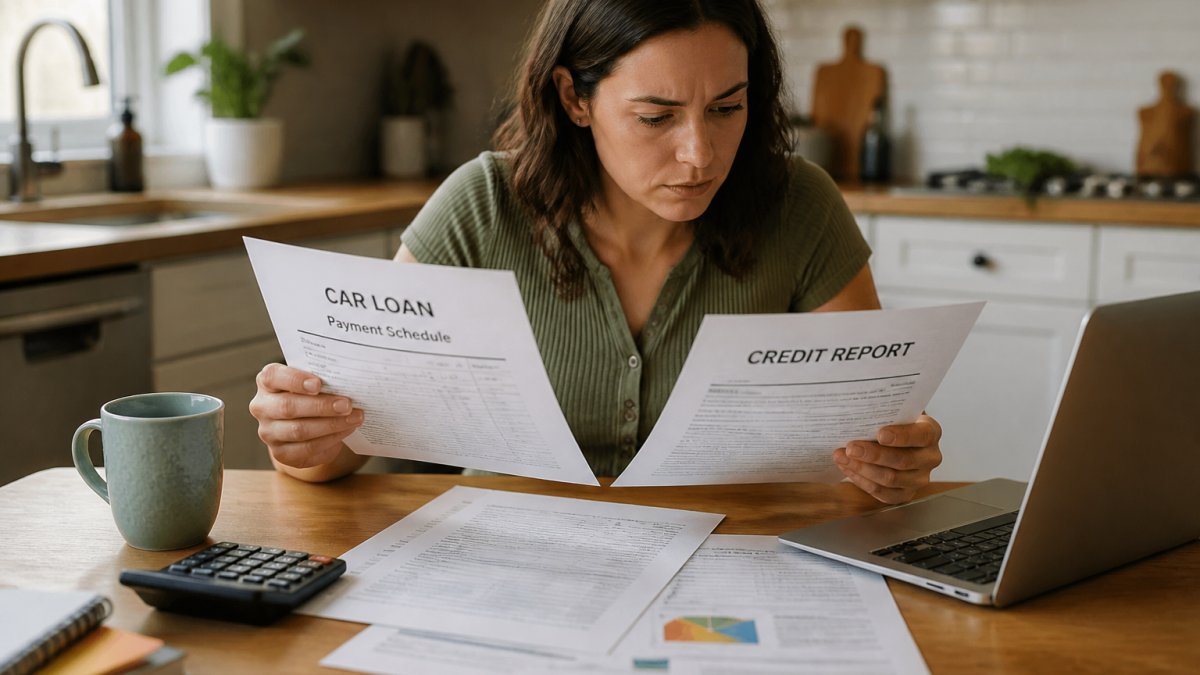
- Set up automatic payments. Autopay removes the risk of a forgotten due date, the most common cause of a late payment.
- Pay at least the full amount, on time. Partial payments can still count as missed.
- Keep other balances low. Your credit use on cards still matters, even with a car loan.
- Avoid new credit applications. Each credit application can trigger a hard inquiry and a temporary score drop.
- Check your reports for errors. A wrong derogatory mark can drag your score down unfairly.
- Use credit monitoring. Watching your credit file helps you catch problems early.
- Be patient through the flat months. Early on, your score may not move. That is normal.
For a deeper walkthrough, our guide on how to improve your credit score for an auto loan breaks each step down in detail.
Rebuild Credit After Car Repossession: A Realistic Path Forward
Rebuilding after a car repossession takes longer, and pretending otherwise does not help. A repossession is a serious negative information item. Under standard Canadian credit-reporting practice, a repossession typically stays on your credit report for about six to seven years from the date of the event, depending on the bureau and your province. Equifax and TransUnion each maintain their own file, so the drop-off date can differ between them.
What you can control is what comes next. A new auto loan, paid on time, starts building fresh positive history on top of the old mark. Lenders weigh recent behavior heavily, so a clean stretch of payments gradually counts for more. A realistic pattern many borrowers see:
- Months 1-6: The repossession still dominates the file. Score movement is small or flat even with perfect payments.
- Months 6-12: A year of clean installment history begins to offset the older negative item. Lenders reviewing recent behavior start to see a different story.
- Year 2 and beyond: The repossession ages, its weight fades, and the newer payment record carries more of the score. Full recovery usually means waiting out the reporting window while keeping every account current.
Our step-by-step guide on rebuilding credit after repossession covers the full recovery plan, from disputing errors to choosing your next lender.
What Slows Your Progress: Late Payments, Hard Inquiries, and Thin Files
Three things routinely slow a rebuild. Knowing them helps you avoid them.
- Late and missed payments. A single missed payment can undo months of progress. Set reminders and use autopay.
- Hard inquiries. Each new credit application can shave points off temporarily. Space out applications.
- A thin credit file. A thin credit file gives scoring models little to work with. A car loan helps here by adding an account, but it takes time to build six months of history and beyond.
There is also the reality of judgment and other derogatory marks. These weigh on your file, and no single loan erases them. They age, and their impact fades, but only with time and consistent behavior.
The Real Cost of Using an Auto Loan to Rebuild Credit
A car loan is not free credit repair. The interest you pay is the price of the payment history you are building.
Before you sign, ask your lender for the real numbers:
- The interest rate and whether it is fixed or variable
- The total interest over the life of the loan
- Any fees, and whether they are disclosed upfront
At Ontario Drivez, we work with more than 30 lenders and partners, and we disclose fees upfront with no hidden charges.
To judge whether a rate is fair for your situation, see our guide on what a reasonable interest rate looks like for bad credit auto loans.
Rebuilding Credit Without an Unnecessary Car Loan
You do not always need a car loan to rebuild credit.
A secured credit card or a credit-builder product reports to the bureaus and builds history without a large loan. Keeping card balances low and paying on time builds credit history steadily.
A car loan makes sense when you actually need a vehicle. Taking one on purely to rebuild credit adds cost and risk you may not need.
Protect Your Progress and Know What Happens When the Loan Ends
The end of your loan term is not the finish line. When you make your final payment, the account closes and stops adding new payment history. Your score can dip slightly if that was your only active installment account, because the credit mix and the steady stream of on-time payments both stop contributing. This is normal, and it is why the months after payoff matter as much as the months during the loan.
Protect what you built with a concrete plan:
- Keep at least one account open and in good standing. A credit card you use lightly and pay in full each month keeps active history on your file.
- Set autopay on every account, not just the car loan. A single missed payment on another account can undo months of progress.
- Consider whether refinancing your auto loan could lower your rate or improve your position before the term ends, and review your car loan amortization schedule so you know exactly when the loan is paid off.
Give the Ontario Drivez team a call to help you achieve your goals. Give us a call at 647-467-3822 or visit us online at ontariodrivez.com.
Frequently Asked Questions
Can a car loan improve your credit score in six months?
It can, but six months is the earliest you should expect visible movement, not a guaranteed score jump. Most lenders report to credit bureaus monthly, so six consecutive on-time payments create a track record where none existed. If your credit file is thin, that new installment history may lift your score modestly. If you have serious negative marks or a recent repossession, six months of payments helps, but the bigger gains usually show up over 12 to 24 months as older negative information ages and your payment record lengthens.
Does paying a car loan build credit even if my score is low?
Yes. Payment history is the single largest factor in most credit scoring models, and a car loan adds a steady stream of reported payments. The key word is consistent: one missed payment can undo months of progress and stay on your file for years. Set up pre-authorized payments so a busy week never turns into a late mark. A low starting score does not block you from building credit; it just means the same good habits have more room to help.
How long does it take to rebuild credit after a repossession?
A repossession stays on your credit report for six years from the date of the missed payments that led to it. That does not mean you wait six years to improve your score. Many people see meaningful recovery within 12 to 24 months by making every payment on time, keeping credit utilization low, and avoiding new hard inquiries. A car loan taken after a repossession can help, provided you can afford the payments and stay current.
How long does a car loan stay on your credit report after it is paid off?
A closed car loan in good standing typically remains on your credit report for about six years from the date it was paid off, and it continues to count positively during that time. A loan with late payments or a default may stay longer depending on the negative item. Paying the loan off does not erase its history, but a clean payment record on a closed installment loan still supports your credit profile when future lenders review your file.
Rebuilding credit with a car loan is a marathon, not a sprint, and the right lender makes the difference between progress and a setback. Ontario Drivez has spent over 20 years helping people get approved regardless of credit history, with flexible payment plans and access to a wide range of cars, vans, and trucks. Give the Ontario Drivez team a call to help you achieve your goals. Give us a call at 647-467-3822 or visit us online at ontariodrivez.com.