 comparison
Buying a Used Car vs Leasing: Which Fits Your Budget
Last Updated: October 27, 2026
Quick Summary
The used car vs leasing choice depends on whether you want to own an asset or pay for access to a newer vehicle. Buying a used car builds equity, has no mileage caps, and lets you sell anytime, while leasing offers lower monthly payments but no ownership and mileage limits.
- Lease payments are typically lower because a lease covers only depreciation during your term.
- Buying used lets every loan payment reduce your balance and grow equity you keep.
- Leases set an annual mileage cap with per-kilometre excess charges at lease end.
- A pre-purchase inspection by an independent mechanic is the highest-value step when buying used.
- Leasing usually demands stronger credit, so approval can be harder to secure than used-car financing.
Table of Contents
- Used Car vs Leasing: The Core Differences at a Glance
- Pros and Cons of Buying a Used Car
- Pros and Cons of Leasing a Car
- Car Lease Mileage Limits and Excess-Mileage Charges
- Using a Lease vs Buy Car Calculator to Run Your Numbers
- Insurance, Registration, and Tax Differences
- Choosing Your Financing Path with Ontario Drivez
- Frequently Asked Questions
Used Car vs Leasing: The Core Differences at a Glance
The used car vs leasing decision comes down to one question: do you want to own an asset at the end, or pay for access to a newer one? Buying a used car means you finance a vehicle you keep, build equity in, and can sell whenever you choose.
Below, we break down payments, equity, mileage limits, and the break-even math so you can pick the path that fits your budget.
| Factor | Buying a Used Car | Leasing a New Car |
|---|---|---|
| Monthly payment | Usually higher | Usually lower |
| Upfront cost | Down payment, taxes | First payment, deposit, fees |
| Ownership at end | You own the vehicle | You return the vehicle |
| Mileage limits | None | Annual cap with excess charges |
| Wear-and-tear risk | Yours to manage | Subject to lease-end inspection |
| Exit flexibility | Sell or trade anytime | Early termination penalties |
How Monthly Payments and Upfront Costs Compare
Lease payments are typically lower than loan payments on a comparable vehicle, because a lease only covers the depreciation during your term, not the whole vehicle. See how to calculate total interest on a car loan so the comparison stays accurate.
Upfront costs differ too. A lease often requires a down payment or security deposit plus administrative fees. A used-car purchase involves a down payment, applicable taxes, and registration.
Ownership, Equity, and What You Keep at the End
Equity is the difference between what your vehicle is worth and what you still owe on it. When you buy a used car, every payment reduces your balance, so equity grows over time and becomes yours to use as a trade-in or a private sale. When you lease, you build no equity. At the end of the term you return the vehicle, pay any fees, and walk away with nothing to sell.
Pros and Cons of Buying a Used Car
Buying used is the stronger financial play for most drivers who plan to keep a vehicle for several years. You absorb the steepest depreciation before you ever sign, and you control the asset from day one.
The Advantages: Equity, No Mileage Caps, and Long-Term Savings
The pros and cons of buying a used car start with cost certainty. Once your loan is paid off, you own a vehicle outright and drive payment-free for as long as it runs. There is no mileage cap, so long commutes and road trips cost you nothing extra. You can modify it, sell it privately, or trade it in whenever you like.
The Drawbacks: Depreciation, Repairs, and Inspection Risk
Used vehicles still depreciate, just more slowly. The bigger risk is condition: a poorly inspected used car can hide accident history, frame damage, or worn components. A common mistake is skipping a pre-purchase inspection or a vehicle-history report to save time. In practice, that shortcut is where budgets blow up. Factor in a repair reserve, and always verify the vehicle's history before signing.
How to De-Risk a Used Purchase: Inspections, History Reports, and CPO
This is where buying used differs most from leasing new, and where a little process pays for itself many times over.
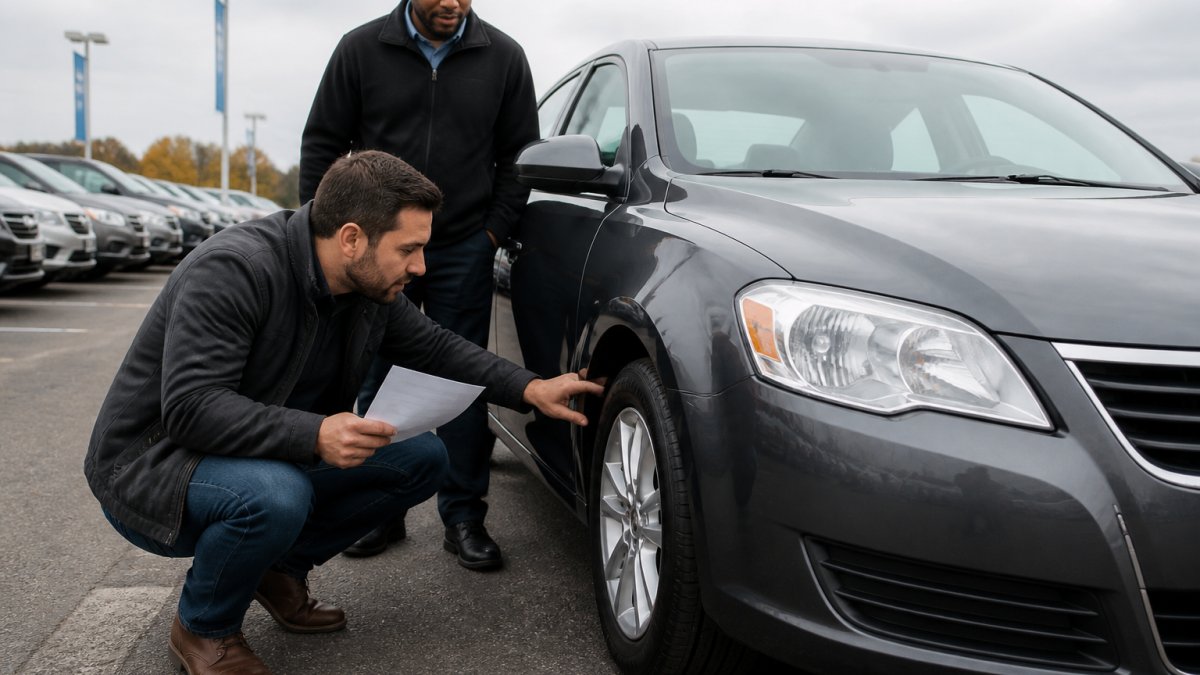
- Pre-purchase inspection (PPI). Have an independent mechanic, not the seller's, put the vehicle on a lift and check the frame, suspension, brakes, tires, fluid leaks, and diagnostic codes. A PPI is the single highest-value step in the process and routinely surfaces issues a test drive cannot.
- Vehicle-history report. Pull a history report to check for reported collisions, salvage or rebuilt branding, odometer rollback, liens, and out-of-province registration. No report is exhaustive, so treat it as one input, not a clean bill of health.
- Lien and ownership check. Confirm the seller can legally transfer clear title and that no lender holds a lien. A lien that follows the car becomes your problem after purchase.
When you weigh the repair reserve and inspection costs against the equity you build and the mileage freedom you gain, buying used usually wins for anyone holding the vehicle past the loan term. For drivers who want the lowest repair-risk version of that path, a CPO used vehicle with remaining warranty is the closest thing to a lease's peace of mind while still building an asset.
Pros and Cons of Leasing a Car
Leasing wins on monthly cash flow and convenience. You drive a newer vehicle under warranty, with predictable payments and minimal maintenance exposure. The catch is that you never own anything, and the contract ties you to mileage and condition rules.
The Advantages: Lower Payments, Newer Cars, and Warranty Coverage
The pros and cons of leasing a car hinge on flexibility of cash flow. Lower monthly payments free up budget for other priorities. You get the latest safety and fuel-saving technology, and the manufacturer's warranty typically covers major repairs for the lease term. If you like driving something new every few years and dislike surprise repair bills, leasing fits that lifestyle well. To explore shorter commitments, read about the benefits of short-term vehicle leasing.
The Drawbacks: No Equity, Wear-and-Tear Fees, and Early Termination
Leasing builds no equity, so you have nothing to sell or trade at the end. Wear-and-tear charges apply if the vehicle comes back with damage beyond normal use. Early termination can be expensive if your circumstances change, and you are locked into the mileage cap you agreed to at signing.
Car Lease Mileage Limits and Excess-Mileage Charges
Car lease mileage limits cap how far you can drive each year, and exceeding them triggers a per-kilometre excess charge at lease end. Most leases set an annual allowance, and you can usually buy a higher allowance upfront for less than the penalty rate. Track your annual mileage against the cap every few months. If you commute long distances or take frequent road trips, a used-car purchase removes that ceiling entirely.
Using a Lease vs Buy Car Calculator to Run Your Numbers
A lease vs buy car calculator compares total cost over your planned ownership period, not just the monthly payment. That distinction matters: the cheaper monthly option is not always the cheaper overall choice. Most calculators stop at payment versus payment, which is why so many drivers are surprised at year four. Before you run it, learn how to calculate car loan affordability.
What to Input: Residual Value, Interest Rate, and Ownership Period
Enter the vehicle's purchase price or capitalized cost, the residual value the lease projects, the interest rate or money factor for each option, your down payment, and how many years you plan to keep the vehicle. The ownership period is the input most people guess at, and it swings the result more than any other figure. Add three inputs most calculators omit: the projected resale value of the used car at the end of your holding period, an annual maintenance and repair reserve, and the lease-end disposition fee plus any excess-mileage or wear-and-tear charges you expect.
A Worked Total-Cost Comparison (Illustrative)
The figures below are illustrative only, plug in your own quotes, rates, and provincial tax rules. The structure is what matters, because it forces every cost onto the same timeline.
| Cost line | Buy a used car (5-year hold) | Lease a new car (4-year term) |
|---|---|---|
| Upfront cash | Down payment + full purchase tax + registration | First payment + deposit + admin fees + tax on payments |
| Monthly outflow | Loan payment (principal + interest) | Lease payment (depreciation + rent charge + tax) |
| Insurance | Owner-chosen coverage | Lessor-mandated higher limits |
| Maintenance and repairs | Yours after warranty; build a reserve | Mostly warranty-covered; wear items still yours |
| End-of-term costs | None beyond normal running costs | Disposition fee + excess mileage + wear-and-tear |
| Asset at end | Vehicle you can sell or trade | Nothing to sell |
| Net cost | Total outflows minus resale proceeds | Total outflows, no residual |
The buy column looks heavier month to month, but the resale proceeds at the end are the offset the lease column never has. The lease column looks lighter until you add the disposition fee, the excess-mileage bill, and the fact that you start over with a new deposit and first payment at renewal.
Finding Your Break-Even Point by Ownership Duration
The break-even point is the number of years after which buying costs less than leasing. Short ownership periods tend to favor leasing, because you avoid the upfront depreciation hit and resale hassle. Longer periods favor buying, because once the loan is paid off, your costs drop to maintenance and insurance. A common pattern is that the crossover lands somewhere in the middle of a typical loan term, and it moves earlier when the used car holds value well and later when repair costs climb.
Insurance, Registration, and Tax Differences
Insurance and registration costs differ between the two paths. A leased vehicle typically requires higher coverage limits because the leasing company holds an interest in the vehicle, which can raise your premium. Ownership brings more choice in coverage levels. Registration and tax treatment also vary: a purchase generally taxes the full vehicle price, while a lease taxes the monthly payments.
Choosing Your Financing Path with Ontario Drivez
Your credit situation should shape the path, not block it. A used-car purchase with financing lets you build equity and payment history at the same time, which matters if you are rebuilding credit after bankruptcy, collections, or a repossession. Compare dealership financing vs bank loans before you decide.
That is where we come in. Ontario Drivez works with more than 30 lenders and partners and over 20 years of experience to find approvals regardless of credit history, including for newcomers, ODSP recipients, and families on tight budgets.
Frequently Asked Questions
Is it better to buy a used car or lease a car?
Neither is universally better; it depends on how long you keep the vehicle and your cash flow. Run a lease vs buy car calculator with your numbers to see which total cost fits your budget over your planned ownership period. Give the Ontario Drivez team a call to help you achieve your goals. Give us a call at 647-467-3822 or visit us online at ontariodrivez.com.
What are the benefits of buying a used car instead of leasing?
Buying a used car means you own the vehicle outright once the loan is paid, you can drive unlimited kilometres, and you can sell or trade it whenever you want. Give the Ontario Drivez team a call to help you achieve your goals. Give us a call at 647-467-3822 or visit us online at ontariodrivez.com.
How do car lease mileage limits affect my costs?
If you commute long distances or take frequent road trips, add up your yearly kilometres before signing. Give the Ontario Drivez team a call to help you achieve your goals. Give us a call at 647-467-3822 or visit us online at ontariodrivez.com.
Can I lease a used car?
Give the Ontario Drivez team a call to help you achieve your goals. Give us a call at 647-467-3822 or visit us online at ontariodrivez.com.
When does buying a used car make more sense than leasing?
Give the Ontario Drivez team a call to help you achieve your goals. Give us a call at 647-467-3822 or visit us online at ontariodrivez.com.
The right choice depends on how long you plan to keep the vehicle and how much certainty you want in your monthly budget. If ownership and equity fit your goals, we can help you find financing that works with your credit history rather than against it. Give the Ontario Drivez team a call to help you achieve your goals. Give us a call at 647-467-3822 or visit us online at ontariodrivez.com.