 listicle
Benefits of Short-Term Vehicle Leasing in 2026
Table of Contents
- What Is Short-Term Vehicle Leasing and How It Works
- Lower Monthly Payments and Upfront Cost Advantages
- Access to Newer Vehicles and Latest Technology
- Warranty Coverage and Reduced Repair Costs
- Short-Term Vehicle Leasing Pros and Cons
- Lease Term Length Options and Flexibility to Change Vehicles
- Vehicle Lease Mileage Limits and End of Lease Options
- Short-Term Leasing vs. Buying, Financing, and Other Alternatives
- Frequently Asked Questions
Last Updated: October 17, 2026
What Is Short-Term Vehicle Leasing and How It Works
Short-term vehicle leasing is a rental arrangement where you use a vehicle for a defined period, typically a few months to three years, without owning it. Unlike traditional ownership or long-term financing, short-term leasing lets you drive a vehicle temporarily, then return it when the lease ends.
In a short-term lease, you pay for the vehicle's depreciation during the term, plus interest and fees. The dealership retains ownership, and you make monthly payments for the right to use the vehicle, you're renting transportation, not building equity.
The lease agreement spells out your responsibilities: maintenance, mileage limits, insurance, and end-of-lease terms. Understanding these upfront helps you avoid surprises and decide whether short-term vehicle leasing suits your situation.
Lower Monthly Payments and Upfront Cost Advantages
Short-term vehicle leasing can offer lower monthly payments than financing a purchase, since you pay only for the vehicle's depreciation during the term, not the entire purchase price.
Upfront costs are also more manageable. Many leases require a down payment (a capitalized cost reduction), but it's often lower than financing a purchase. Some options, including Ontario Drivez's flexible payment plans, offer zero-down arrangements, so you can get into a vehicle quickly without a large initial outlay.
This affordability makes short-term vehicle leasing attractive for budget-conscious families, individuals on fixed incomes, or anyone experiencing financial constraints. You can drive a newer vehicle with lower monthly obligations, freeing up cash for other priorities.
Access to Newer Vehicles and Latest Technology
Leasing puts you behind the wheel of newer vehicles with the latest features, safety systems, and technology.
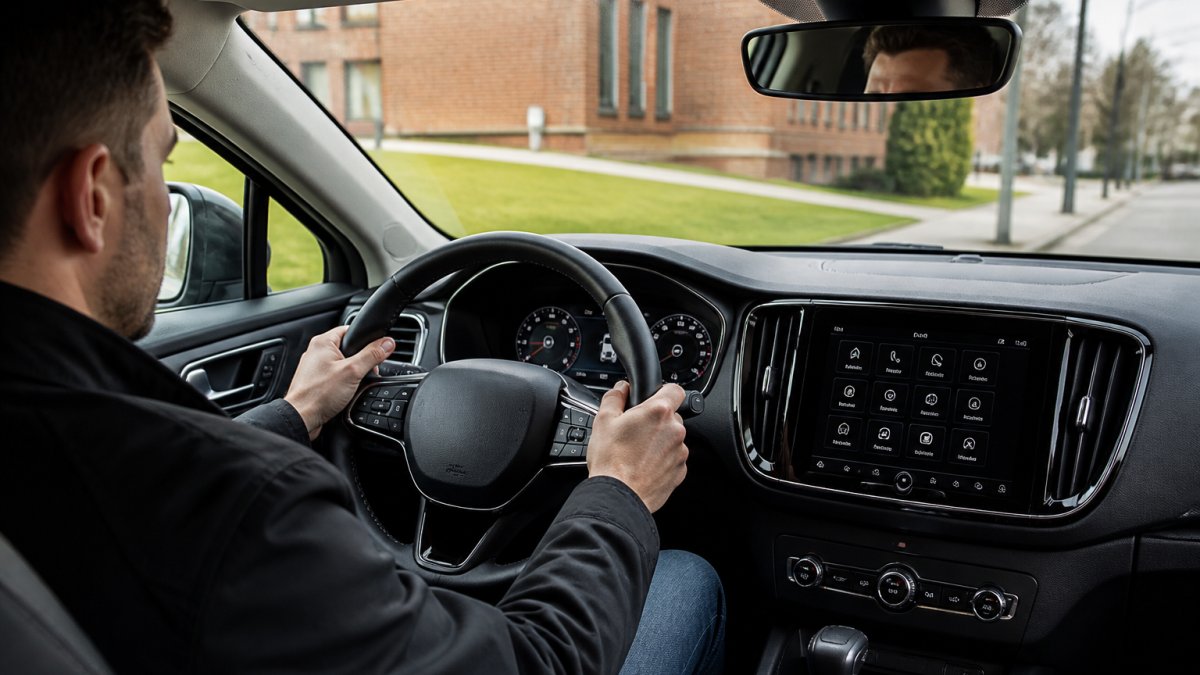
Newer vehicles come with advanced safety features like adaptive cruise control, lane-keeping assistance, automatic emergency braking, and collision avoidance, plus the latest infotainment, smartphone integration, navigation, and entertainment, without the premium price of a brand-new purchase.
Warranty Coverage and Reduced Repair Costs
Most leased vehicles are covered by the manufacturer's warranty for the entire term, protecting you against unexpected mechanical failures, defective parts, and major repair expenses. The dealership handles claims, and you typically pay nothing beyond regular maintenance.
This eliminates the financial risk of major repairs, engine problems, transmission issues, electrical failures, all covered, and the uncertainty of owning an older vehicle where repairs quickly become costly.
Maintenance costs are predictable too. Many lease agreements include routine maintenance (oil changes, tire rotations, filter replacements), and even when they don't, warranty coverage can help keep repair bills minimal.
Short-Term Vehicle Leasing Pros and Cons
Short-term vehicle leasing offers genuine advantages, but it's not right for everyone. Understanding both sides helps you decide.
Pros of short-term vehicle leasing:
- Lower monthly payments than financing a purchase
- Access to newer vehicles with latest technology and safety features
- Predictable costs with warranty coverage and included maintenance
- No hassle of selling the vehicle when you're done
- Flexibility to upgrade to a different model when the lease ends
- No long-term commitment if your circumstances change
- Reduced stress about depreciation and residual value
Cons of short-term vehicle leasing:
- Mileage limits impose restrictions on how much you can drive
- Excess mileage charges add up quickly if you drive beyond your allowance
- Wear-and-tear charges at lease end can be costly
- You build no equity, all payments go to the leasing company
- Early termination penalties apply if you need to exit the lease early
- Additional fees may increase your total cost
- Limited customization options; you must return the vehicle in good condition
The right choice depends on your driving habits, financial situation, and whether you value flexibility over long-term ownership.
Lease Term Length Options and Flexibility to Change Vehicles
Short-term vehicle leasing typically offers terms of 12 to 36 months. You choose a duration matching your temporary needs.
Shorter terms (12-24 months) suit temporary needs: a new job in an unfamiliar city, a medical situation requiring reliable transportation, or a business project with a defined timeline. Once your situation changes, you return the vehicle and walk away.
At lease end, you can return the vehicle and lease something entirely different, a newer model, an SUV instead of a sedan, an electric vehicle. Each lease end lets you reassess your needs, flexibility impossible with ownership, where selling and buying takes significant time, effort, and transaction costs.
Questions to Ask Before Signing a Short Lease
A genuinely short lease is only flexible if the contract terms support it. Before signing, ask and get written answers to:
- What is the exact start and end date, and is there a grace period for return?
- What is the total kilometer allowance, and what are the excess charges?
- What counts as excess wear and tear, and is there a wear-and-tear guide?
- What is the early termination formula, and are there penalties on top?
- Can the lease be extended month to month, and at what rate?
- Is the lease transferable, and what fees and credit checks apply?
- What maintenance is included, and where must it be performed?
- What insurance limits are required, and are there gap-insurance requirements?
- What deposit is required, and under what conditions is it refunded?
Early Termination, Extensions, and Life Changes
Life changes are the main reason people need a short lease, so plan for them before signing. Early termination typically requires the remaining payments, a calculated penalty, or both.
Extensions are often easier than early exits. Many lessors allow month-to-month extensions at term end, bridging a gap until your next vehicle arrives. If you may need the vehicle longer, ask whether an extension can be written into the contract.
Lease transfers are another exit route: another person assumes the remaining payments, subject to credit approval and a transfer fee. It can be an alternative to early termination, but finding a qualified transferee takes time and the original terms still apply.
Give the Ontario Drivez team a call to help you achieve your goals. Give us a call at 647-467-3822 or visit us online at ontariodrivez.com.
Vehicle Lease Mileage Limits and End of Lease Options
Every lease specifies a mileage allowance, typically 12,000 to 20,000 kilometers per year. A three-year lease with a 15,000-kilometer annual allowance lets you drive 45,000 kilometers total without penalties.
Understanding Excess-Mileage Charges
Exceeding your limit triggers excess-mileage charges, usually per kilometer over. These can add up quickly.
Track your annual kilometers for several months before signing to estimate actual usage. If you consistently drive more than the standard allowance, negotiate a higher limit upfront, typically cheaper than paying excess charges later.
What Happens at the End of Your Lease
At lease end, the simplest option is returning the vehicle to the dealership, which inspects for excess wear and tear, assesses mileage, and calculates any fees. If the vehicle is in good condition and within your mileage limit, you return it and walk away.
Some agreements let you purchase the vehicle at lease end for a predetermined residual value, appealing if you've grown attached or want to extend use. Others allow lease transfers, where another person assumes the remaining payments if your circumstances change mid-lease.
Short-Term Leasing vs. Buying, Financing, and Other Alternatives
Choosing between short-term vehicle leasing and other options requires understanding the trade-offs.
| Factor | Short-term lease | Subscription | Long-term rental | Lease transfer | Buying used |
|---|---|---|---|---|---|
| Typical commitment | A few months to 3 years | Month to month | Weeks to months | Remaining term of original lease | As long as you own it |
| Upfront cost | Deposit or capitalized cost reduction | Deposit or first month | Deposit and daily/weekly rate | Transfer fee and deposit | Full purchase price or loan down payment |
| Monthly cost | Lower than financing the same vehicle | Usually highest | Higher for longer periods | Often lower than a new lease | Loan payment or none if paid cash |
| Insurance | You arrange | Often included | Usually extra | You arrange | You arrange |
| Maintenance | Warranty-covered; routine maintenance may be included | Often included | Usually extra | Warranty-covered | Your responsibility |
| Mileage limits | Yes, with excess charges | Usually generous or unlimited | Usually unlimited | Yes, per original contract | None |
| Exit flexibility | Early termination penalties | Cancel with notice | Return at end of rental period | Must complete or transfer again | Sell the vehicle |
| Equity at end | None | None | None | None | Yes |
Short-term leasing vs. buying used: Buying a used vehicle costs less upfront and builds equity, but you inherit unknown maintenance history, older technology, and potential repair costs.
Short-term leasing vs. financing a new vehicle: Financing a new car means ownership and equity-building, but higher monthly payments and full responsibility for maintenance and repairs.
Short-term leasing vs. vehicle subscriptions: Subscriptions bundle the vehicle, insurance, maintenance, and sometimes registration into one monthly fee, with more flexibility to swap vehicles.
Short-term leasing vs. long-term rentals: Rental companies offer extended rates for weeks or months, sometimes cheaper than leasing for very short periods.
Short-term leasing vs. lease transfers: A lease transfer lets you assume someone else's remaining lease, sometimes at a lower monthly payment.
A simple decision framework:
- Need a vehicle for under three months? Compare long-term rentals and subscriptions first.
- Need one for three months to three years with predictable costs? Short-term leasing is usually the strongest fit.
- Found a specific vehicle with a short remaining term? A lease transfer may save money, but verify the original terms.
- Planning to keep the vehicle beyond the lease term? Compare the residual buyout against buying used.
- High annual kilometers? Negotiate a higher mileage allowance upfront or consider financing.
Frequently Asked Questions
What are the main benefits of short-term vehicle leasing?
Short-term vehicle leasing offers lower monthly payments compared to financing a purchase, access to newer vehicles with the latest technology, comprehensive warranty coverage that reduces repair costs, and flexibility to change vehicles when your needs shift. You avoid the hassle of selling a vehicle or dealing with depreciation, and you're not locked into a long-term commitment. This makes leasing ideal for people with temporary transportation needs, those who like driving new cars, or anyone seeking budget-friendly monthly payments.
How does lease term length affect your decision?
Lease term length typically ranges from several months to three years, allowing you to match the contract to your actual needs. Shorter terms offer maximum flexibility if your circumstances change, job relocation, family size shifts, or temporary projects. Longer terms within the short-term range often come with slightly lower monthly payments. The key is choosing a term length that aligns with how long you genuinely need the vehicle, avoiding overpaying for time you won't use or being locked in when plans change unexpectedly.
What are vehicle lease mileage limits and excess-mileage charges?
Most leases include a mileage allowance, typically measured in kilometres per year or per month. If you exceed this limit, you pay an excess-mileage charge per kilometre over the allowance. This cost can vary by lease agreement but can add up quickly for high-mileage drivers. Before signing, calculate your expected annual driving and confirm the mileage limit covers your needs. If you regularly drive long distances, a lease with a higher mileage allowance, or purchasing instead, may be more cost-effective than paying excess charges at lease end.
What are my options when a short-term lease ends?
At lease end, you typically return the vehicle to the dealership. The lessor inspects it for excessive wear and tear; any damage beyond normal use may result in lease-end fees. You then have options: lease another vehicle, purchase the vehicle if the lease agreement allows it, or walk away without ownership concerns. Some leases offer early termination options if your needs change before the contract expires, though early exit may carry penalties. Understanding these end-of-lease options before signing helps you plan your next steps and avoid surprises.
Short-term vehicle leasing provides a practical path to reliable transportation without long-term commitment or the burden of ownership. For many people, those with temporary needs, budget constraints, or credit challenges, it's the most sensible choice. Give the Ontario Drivez team a call to help you achieve your goals. Give us a call at 647-467-3822 or visit us online at ontariodrivez.com.